“You can’t build good systems on bad processes; it’s just not how it works”
– Imaan Powell, Salesforce Functional Consultant.
AI can’t compensate for poor data and processes. Everyone wants AI, but not everyone is asking the right questions. The benefits for sales teams are clear: lead prioritisation, opportunity forecasting, next-best action recommendations and sales coaching. But AI can only be as good as the data it pulls from, and that data can easily become chaotic without the proper oversight.
The biggest barrier to AI adoption in high-tech sales is unlikely to be the AI itself. It is often the years of technical and process debt sitting underneath it.
Why this is a priority for High-Tech businesses
Unsurprisingly, the high-tech sector has seen some of the highest rates of AI adoption. According to Statista, 49% of technology businesses use AI in their sales and marketing functions.
As a fast-paced, highly competitive industry, the high-tech sector is prone to getting caught up in hype, leading to rapid adoption of promising new technologies. Jumping on the ‘hype train’ can be a great opportunity to pioneer innovation and drive new business. But the temptation to follow every new technology trend can also create technology sprawl, process complexity and an accumulation of legacy systems.
AI doesn’t fix process debt – it exposes it
High-tech companies often have years of accumulated tools, customisations and workarounds. At one point, each of these may have made sense individually. But that doesn’t mean that they work harmoniously today. The complexities that humans have learned to navigate can make it much harder for AI to interpret data and generate useful recommendations.
What happens when you deploy AI on poor foundations?
- Inconsistent opportunity data → unreliable forecasting
- Siloed customer information → weak recommendations for next-best actions
- Incomplete activity history → subpar sales coaching
- Inaccurate account data → irrelevant personalisation
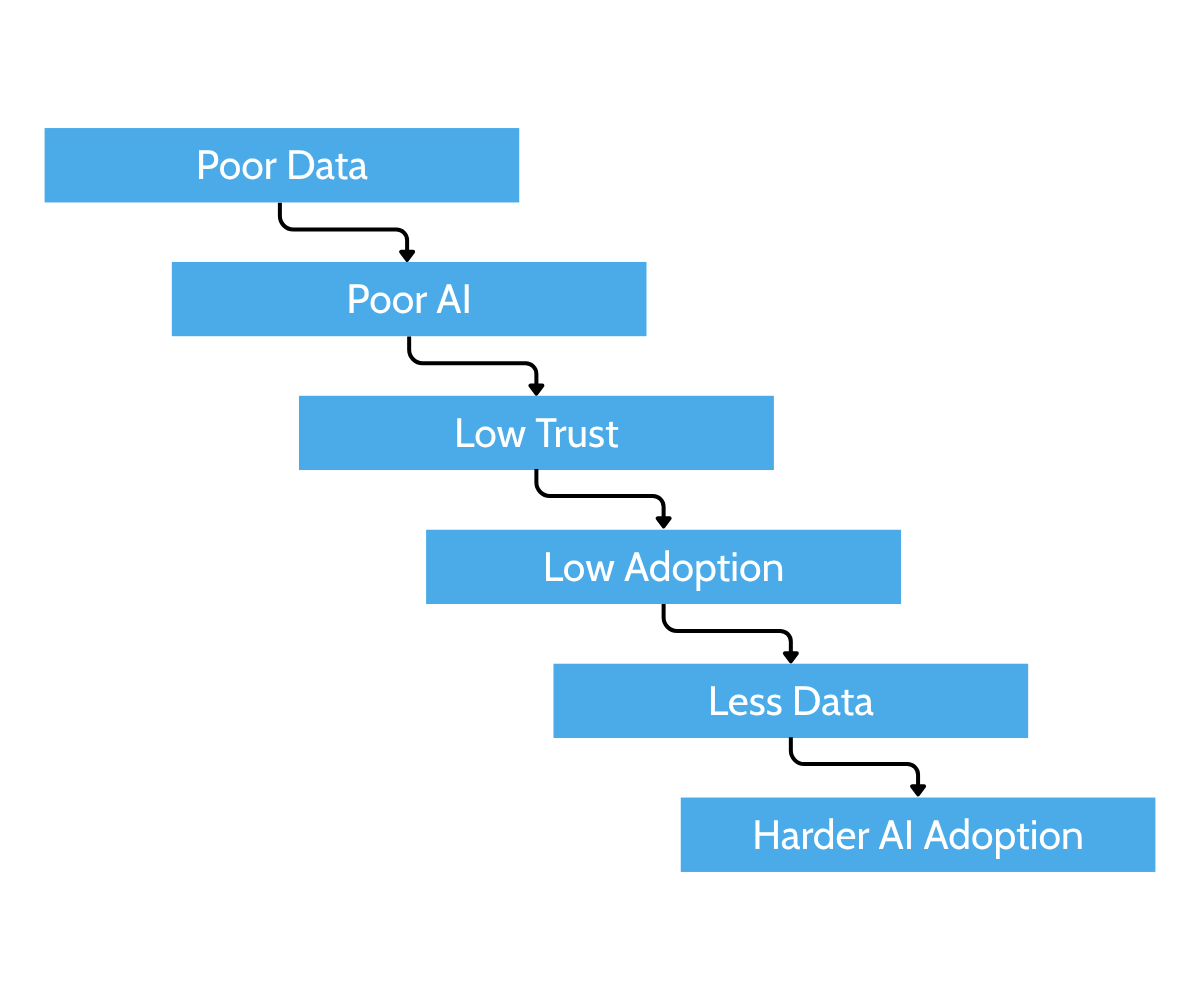
When sellers don’t trust AI, they stop using it. When they stop using it, the organisation generates less behavioural data. That makes future AI initiatives harder.
What does it mean to have AI-ready Salesforce data?
1. Accurate:
Is your information correct and up to date?
2. Complete:
Are all important fields populated? If opportunities are missing key data points, such as the Amount field or case win/loss reasons, AI has less reliable information to work with.
3. Consistent:
Are teams conforming to the same naming conventions and classifications? While humans can instantly equate ‘SaaS’ and ‘Software’, automated systems may interpret them as different.
4. Structured:
Is all important information housed within usable fields? Data that is scattered between call summaries, email chains, support tickets and opportunity notes can be difficult for AI systems to access and interpret, leaving potentially valuable information unused.
5. Connected:
Is the customer journey comprehensively connected across your CRM and wider sales tech stack? The more your journey is fragmented, the more difficult it is to get a genuinely representative foundation for your AI to call upon.
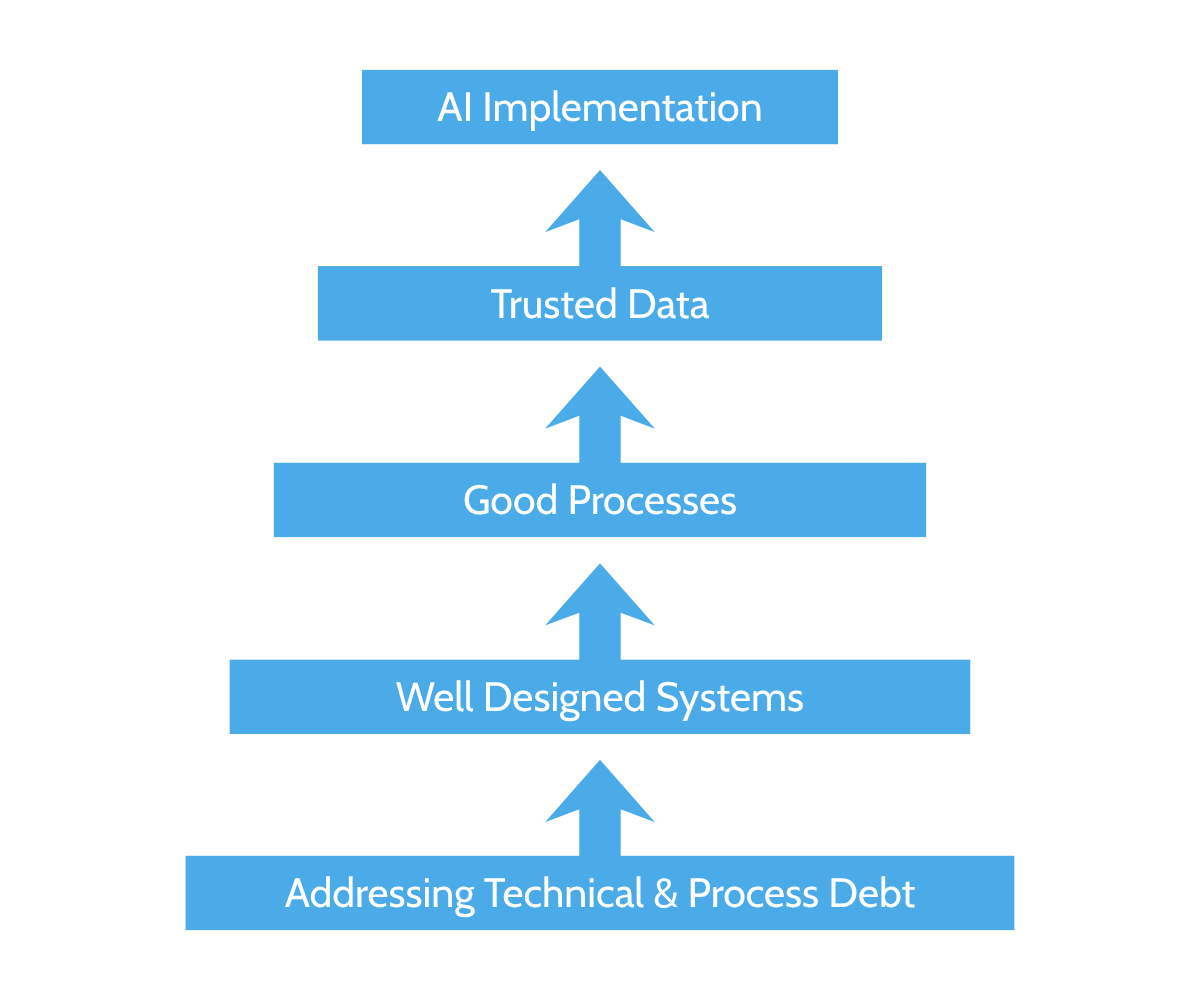
AI readiness is a digital transformation project, not an AI project
Preparing to implement AI in Salesforce isn’t about adding more tools; its about refining the data and processes beneath it.
Practically, this means asking yourself:
- Which processes can be simplified?
- Which fields genuinely matter?
- Which integrations need rationalising?
- Where is data being duplicated?
- Where are salespeople still relying on spreadsheets or manual workarounds?
Assessing your readiness for AI
If you aren’t ready for a full-scale transformation, it can be helpful to focus on actionable next steps. Instead of aiming to deploy AI across your entire sales process, start by assessing individual use cases for their readiness.
Opportunity Forecasting
- Is the use of opportunity stages consistent?
- Is historical opportunity data reliable?
- Are your win/loss reasons actually meaningful?
Lead Prioritisation
- Are lead sources trustworthy?
- Are account classifications consistent?
- Is data on conversion outcomes being captured?
Next-Best Actions
- Do you have enough data on customer interactions?
- Are customer signals captured in a structured format?
- Are sales, service and marketing connected?
Is your Salesforce data ready for AI?
AI is only as good as the data and processes beneath it. If you rush into deployment, you may not have the data quality you need, leaving your AI with an unreliable foundation. Start by focusing on clean data and pragmatic processes, one step at a time.
Not sure whether your Salesforce data is ready for AI? Get in touch with our team to discuss your data, processes and next steps.